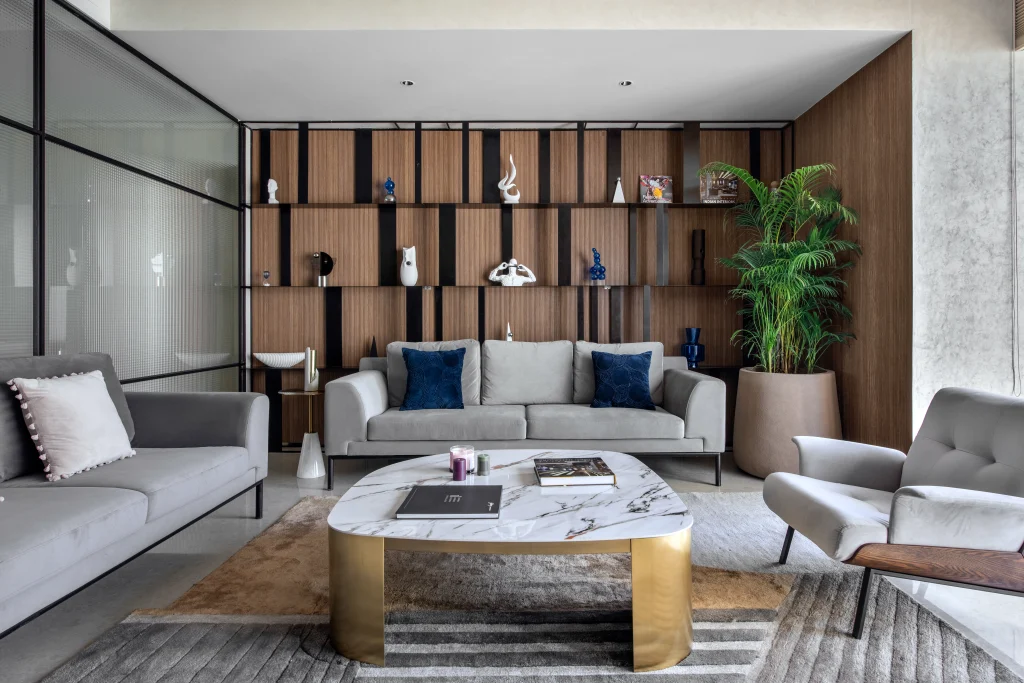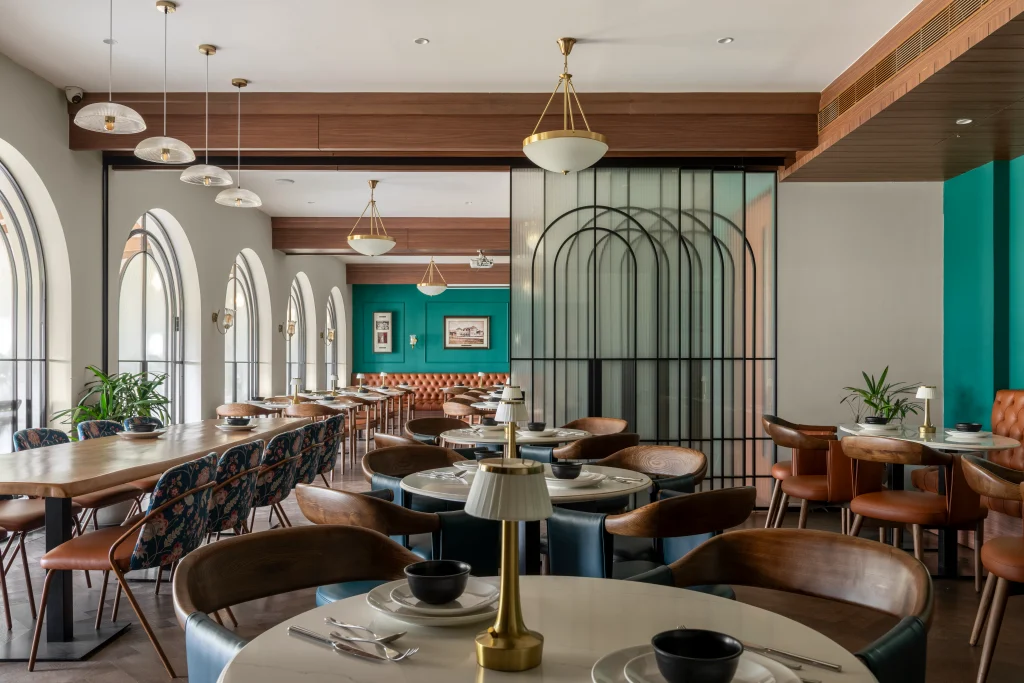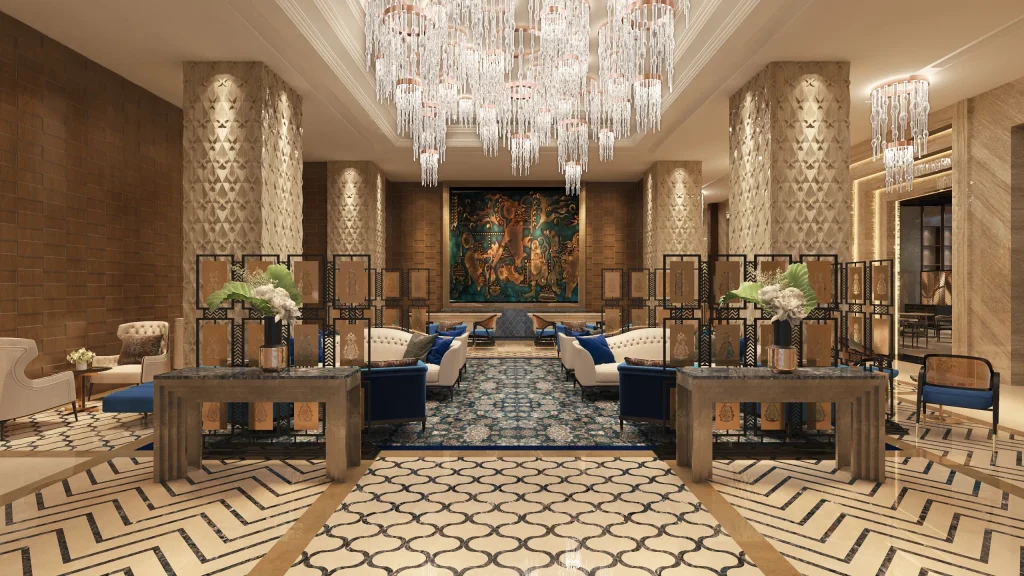
India has a rich design heritage to draw from. Its architecture, materials, craftsmanship, textiles and relationship with light can all give a hospitality space a stronger connection to its surroundings.
Luxury properties have used these elements for years. What is changing is the way they are being used. Instead of bringing regional motifs into every part of a property, designers are choosing a few elements and giving them more room to make an impression.
Heritage can be part of the architecture, the materials, the light or even the smallest details a guest encounters during a stay. The result can feel distinctly Indian without looking like a recreation of the past.
Why less is proving to be more
One of the clearest changes is restraint. Where a property might once have carried a regional motif through the lobby, corridors and guest rooms, it can now appear in a few carefully chosen places: a screen between the dining room and a quieter area, stone at the entrance or a single wall in the restaurant.
For a hospitality interior designer, using fewer elements means choosing each one more carefully. A material, pattern or crafted detail has to work with the architecture and the rest of the space. Used well, it feels like part of the design rather than an extra layer of decoration.
Restraint also changes what the reference is for. The aim is not to make a hotel look historic. It is to create a property that feels as though it belongs where it stands, while still offering the comfort, clarity and refinement expected of a luxury hotel.
The idea is simple. Give the strongest elements enough space to be noticed.
Start with where the property stands
A coastal property has a different relationship with light, material and landscape from a hill retreat. A hotel in Rajasthan may draw from stone and courtyards, while a property in Kerala may find its character through timber, shaded spaces and a stronger connection with the outdoors.
These differences can influence the design from the beginning.
The location can affect the materials used, the way rooms open towards gardens, the amount of sunlight entering a space and even how guests move through the property.
A property that feels connected to its setting usually comes from interior designers for hotels who treat the location as something to design around, not a mood board. The location is not simply something to take inspiration from. It can help shape the spaces themselves.
Choose materials that belong to the place
India has an extraordinary range of materials that can give a hospitality interior a strong sense of place.
Jaisalmer stone brings warmth and colour. Laterite can connect a west coast property to its landscape. Timber can add depth and texture, while hand-finished plaster can change subtly as light moves across a wall.
The material does not need to appear everywhere.
Stone can establish the character of an entrance. Timber can define a reception desk. A locally made tile can give a restaurant a detail that guests remember. A traditional material can also be used in an entirely new way, which often does more for a space than using it as it has always been used.
A beautiful material also needs to work in a busy hotel. A corridor may see hundreds of footsteps every day. A stone floor may need regular maintenance. A wall finish needs to withstand daily use. A locally made tile may need to be replaced years after the property opens.
These are practical questions, but they belong in the design conversation.
When they are considered early, materials can be chosen with both appearance and performance in mind. That allows the property to retain its character without making the design difficult to maintain.
Bring Indian craftsmanship into contemporary spaces
Craftsmanship can give a hospitality interior a quality that mass-produced finishes rarely have.
A hand-worked brass detail can add character to a bar. A carved screen can divide a lobby while allowing light to pass through. A traditional technique can be applied to a contemporary piece of furniture, giving it a connection to its origins without making it look old-fashioned. A regional pattern can be simplified until only its geometry remains.
The craft does not need to dominate the room.
Sometimes one carefully made piece is enough to introduce a sense of place. It can sit alongside simpler furniture and cleaner architectural lines, allowing both the craft and the contemporary elements to stand out.
Working with regional makers can also keep traditional skills in use and bring a stronger connection between the property and the place where it stands.
Build heritage into the architecture
Indian architecture has long used light as part of the design. The jaali, courtyard, veranda and deep-set opening can all control how sunlight enters a space, creating a changing relationship between light and shade throughout the day.
This thinking works particularly well in hospitality. A perforated screen can cast changing patterns across a lobby. A courtyard can create a quieter transition between spaces. A shaded terrace can make an outdoor restaurant more comfortable as the afternoon moves into evening.
Some of the strongest references to local heritage are the ones that become part of the building itself. A stone floor can continue from the entrance into the public areas. A screen can create privacy while also becoming an architectural feature. A shaded passage can connect two spaces while changing the way guests experience the journey between them.
These decisions tend to last longer than furniture or decorative pieces. They also allow heritage to remain part of the property as the interiors are updated over time, and they make the property feel different at different times of the day.
Why this matters to the property
A strong sense of place can give a hotel an identity that guests recognise and remember.
When many luxury properties compete for attention through photographs and digital platforms, a space that looks and feels connected to its destination can stand apart from a more generic interior.
It can also give the brand something more meaningful to communicate. The materials, architecture, craftsmanship and landscape become part of the property’s story rather than simply part of its decoration.
The design and the identity of the property begin to support each other.
The Final Word
Luxury hospitality is about more than creating beautiful spaces. When the architecture, materials, craftsmanship and landscape reflect their surroundings, the experience can feel more connected to the destination.
India offers an extraordinary design heritage to work with. The opportunity is to interpret it carefully, choosing elements that feel natural within a contemporary luxury property.
For The BNK Group, that starts with understanding the character of the place. Local materials, craftsmanship, architectural traditions and the surrounding landscape can each contribute to the design, while the wider needs of the property remain part of the thinking.
As one of the best hotel interior designers in India, The BNK Group brings this approach to hospitality spaces where local character can be felt throughout the property without overwhelming the design.